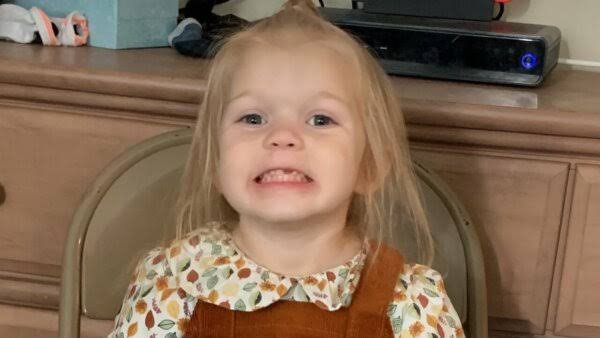
The death of a young child following prolonged neglect is a deeply troubling reminder of how important protection, supervision, and early intervention are in a child’s life. When a child is unable to meet her own basic needs, adults and institutions around her have a responsibility to notice warning signs and take appropriate action.
Cases involving severe child neglect can raise difficult questions about family responsibility, community awareness, social services, education, healthcare, and the systems designed to protect vulnerable children. They also remind us that neglect is not always immediately visible. A child may appear quiet, withdrawn, frequently absent from school, or unusually anxious without anyone realizing the seriousness of what is happening at home.
The story referenced by this title concerns a five-year-old girl whose life ended after severe neglect and whose discovery in a closet brought attention to the circumstances surrounding her care. Because individual case details can vary and reports may change as investigations progress, it is important to distinguish confirmed information from assumptions. The broader lessons, however, are important for families, educators, neighbors, healthcare professionals, and communities everywhere.
Rather than focusing on disturbing details, this article examines what child neglect means, why young children are particularly vulnerable, what warning signs adults should recognize, how concerns can be reported, and what communities can do to create safer environments for children.
1. Understanding Why the Story Has Drawn Attention
A case involving the death of a five-year-old naturally attracts public attention because children of this age depend heavily on adults for their safety and everyday wellbeing. Young children generally cannot independently arrange adequate food, healthcare, safe housing, transportation, or protection from dangerous circumstances. Their wellbeing is closely connected to the adults responsible for them.
When a child dies after a period of severe neglect, people often ask how the situation could have continued without meaningful intervention. That question is important, but answering it responsibly requires looking beyond a single household. Child welfare cases can involve complicated circumstances, incomplete information, missed opportunities, communication problems, and failures to recognize the seriousness of warning signs.
It is also important not to turn an individual tragedy into speculation about people whose involvement has not been established. Investigations exist to determine what happened, who knew what, when concerns were raised, and whether appropriate responsibilities were fulfilled.
The most useful response is therefore not simply outrage. It is education. Understanding neglect can help ordinary people recognize situations that might otherwise remain unnoticed.
A child who is regularly left without adequate supervision, repeatedly appears extremely tired or unwell, lacks appropriate clothing, frequently misses school, or seems unusually fearful may need help. None of these signs automatically proves neglect, but a pattern can justify concern.
The tragedy described in the title therefore deserves attention not only because of the circumstances of one child’s death, but because it highlights the importance of recognizing vulnerable children before a situation becomes an emergency.
2. What Child Neglect Really Means
Child neglect generally refers to a failure to provide a child with essential care, supervision, protection, or support. It can take different forms, and it is not always obvious from the outside.
Physical needs may include adequate nutrition, appropriate clothing, safe living conditions, hygiene, medical attention, and supervision. Emotional needs are also important. Children need stability, attention, reassurance, and an environment in which they can develop without persistent fear or uncertainty.
Neglect can happen for different reasons. Some situations involve adults who knowingly fail to provide appropriate care, while others may involve serious difficulties such as substance misuse, untreated mental health challenges, extreme financial hardship, domestic instability, lack of support, or limited understanding of a child’s needs. These circumstances do not remove responsibility for a child’s safety, but understanding them can help professionals determine what type of intervention may be necessary.
Importantly, poverty alone should not be automatically treated as neglect. Families with limited financial resources may still provide loving, responsible care. Child welfare concerns should focus on a child’s actual safety and wellbeing rather than simply judging a family’s economic circumstances.
Neglect is especially concerning when basic needs are repeatedly unmet and no responsible adult takes effective steps to protect the child.
A five-year-old cannot reasonably be expected to solve those problems alone. Adults must recognize that responsibility belongs to the people and systems capable of providing protection.
3. Why Young Children Are Especially Vulnerable
A five-year-old is still developing physically, emotionally, socially, and intellectually. Children at this stage can communicate many needs, but they may not understand how serious a dangerous situation is or know how to seek help effectively.
Young children may also believe that whatever happens at home is normal. If they have experienced an unhealthy environment for a long period, they may not realize that they are entitled to better care.
This makes observation particularly important.
Teachers, relatives, healthcare workers, neighbors, childcare providers, and other adults may sometimes notice changes that a child cannot explain. A child who suddenly becomes unusually quiet, stops participating in normal activities, frequently appears tired, or demonstrates a significant change in behavior may be communicating distress indirectly.
Children also differ in how they respond to difficult circumstances. One child may become withdrawn, while another may become unusually active or anxious. Some children may attempt to please adults constantly because they are afraid of making mistakes.
No single behavior should automatically be interpreted as proof of neglect. However, significant changes combined with other concerns deserve attention.
The younger the child, the more important it is for responsible adults to take concerns seriously. A five-year-old should not be expected to manage circumstances that would challenge even an adult.
4. The Difference Between a Difficult Family Situation and Serious Neglect
Families can experience difficult periods without neglect being involved. Parents and caregivers can become overwhelmed by work, financial problems, illness, relationship difficulties, or other challenges. Temporary struggles do not necessarily mean a child is being neglected.
The distinction becomes important when a child’s essential needs remain unmet over time and responsible adults fail to obtain assistance or take reasonable steps to improve the situation.
For example, a family experiencing financial hardship may struggle to purchase certain items but still make sure the child has food, supervision, medical care, and a safe place to sleep. Another family might have adequate financial resources but fail to provide basic care or supervision.
This is why professionals generally look at the overall circumstances rather than one isolated incident.
The lesson from serious cases is that warning signs should not be dismissed simply because a family appears to be going through a difficult period. At the same time, concerns should be addressed carefully and fairly rather than through assumptions.
A balanced approach recognizes two important truths: families sometimes need support, and children always need protection.
When adults are struggling, connecting them with appropriate services can sometimes prevent a crisis. When a child is in immediate danger, however, protection must take priority.
5. Warning Signs That a Child May Need Help
Recognizing possible warning signs can be one of the most valuable lessons from cases involving severe neglect.
A child may repeatedly arrive at school without appropriate clothing for the weather, frequently complain about hunger, appear consistently exhausted, or have health concerns that are not being addressed. There may also be repeated absences from school or childcare without a clear explanation.
Behavioral changes can provide another clue. A child who becomes unusually withdrawn, fearful, anxious, or unusually concerned about pleasing adults may be experiencing difficulties. Again, these behaviors can have many explanations, so adults should avoid jumping to conclusions.
The more concerning situation is usually a pattern rather than one isolated observation.
Adults should also pay attention when a child repeatedly says that nobody is available to care for them, that they are regularly left alone, or that they do not have access to necessary assistance when they are sick or frightened.
Physical surroundings may sometimes provide additional information. An unsafe or severely unsuitable living environment can be a concern when it creates an ongoing threat to a child’s wellbeing.
The goal of recognizing warning signs is not to become suspicious of every family. It is to make sure that children who genuinely need help are not overlooked.
6. Why Children May Not Tell Someone What Is Happening
One of the most difficult aspects of child welfare is that children do not always report problems directly.
A young child may be afraid that speaking will cause trouble for a parent, caregiver, sibling, or themselves. They may worry that nobody will believe them. Some children may also fear being separated from familiar people or being blamed for what happened.
Children can also lack the vocabulary needed to explain complicated situations. A five-year-old may understand that something feels wrong without knowing how to describe it.
Sometimes a child may behave as though everything is normal because they have learned to adapt to their environment. This can make it difficult for adults to recognize what is happening.
For these reasons, adults should create opportunities for children to communicate without pressure.
A child should be able to speak with trusted adults in an environment where they are listened to calmly. Adults should avoid leading questions or making promises they cannot keep.
When a child shares a concern, the response matters. Dismissing the child can discourage future communication. A calm response such as acknowledging that the child has been heard can help create a safer environment.
Children should never carry the responsibility of proving that they deserve protection.
7. The Importance of Schools in Protecting Children
Schools can play a critical role in identifying children who may be experiencing serious difficulties at home.
Teachers and school staff see children regularly and may notice patterns over weeks or months. Changes in attendance, behavior, appearance, concentration, social interaction, or academic performance can sometimes indicate that a child needs additional support.
A teacher does not need to determine exactly what is happening before raising a concern through the appropriate safeguarding process. Their responsibility is generally to observe, document relevant information, and follow established procedures.
Schools can also provide children with trusted adults outside the home. For some children, a teacher, counselor, nurse, or other school professional may be the first person who recognizes that something is wrong.
This makes child-safety training extremely valuable.
Staff need to know what signs to look for, how to respond when a child speaks about a concern, how to document observations, and where to report serious issues.
The lesson is particularly important for younger children because they spend substantial time in structured environments where changes can become noticeable.
A school cannot solve every family problem, but it can serve as an important protective connection between a child and the wider community.
8. Why Neighbors and Relatives Can Also Matter
Child protection is not exclusively the responsibility of parents, schools, or government agencies. Relatives, neighbors, family friends, and community members may also notice concerning patterns.
Sometimes a child regularly appears unattended, a home environment seems persistently unsafe, or a caregiver’s behavior raises concerns. People may hesitate to act because they do not want to interfere in someone else’s family life.
That hesitation is understandable, but when a child’s safety may be at risk, responsible action is more important than avoiding an uncomfortable conversation.
This does not mean confronting a family aggressively or attempting to investigate the situation personally. Untrained individuals should not put themselves or the child in greater danger.
Instead, concerns can be shared with appropriate child protection, emergency, school, healthcare, or law-enforcement authorities depending on the seriousness and local requirements.
Even a small observation can become important when combined with information from other sources.
Communities become safer when people understand that protecting children is a shared responsibility.
9. The Role of Healthcare Professionals
Healthcare professionals may have important opportunities to recognize neglect because children sometimes visit doctors, nurses, clinics, hospitals, or other health services.
A healthcare professional may notice that recommended appointments are repeatedly missed, a child’s health concerns remain untreated, or caregivers have difficulty providing information about the child’s basic needs.
Healthcare settings can therefore become an important point of contact for children who might otherwise have limited opportunities to interact with trusted adults.
Medical professionals are trained to distinguish between different possible causes of a child’s condition and to follow safeguarding procedures when concerns arise.
It is important not to assume that every missed appointment or health problem means neglect. Families can face transportation difficulties, financial challenges, scheduling problems, and many other obstacles.
However, persistent patterns combined with other warning signs may require further attention.
Strong communication between healthcare services, schools, social workers, and other appropriate organizations can help prevent information from becoming isolated within separate systems.
Protecting a child often depends not on one person noticing everything, but on several responsible adults connecting important pieces of information.
10. Why Early Intervention Can Make a Difference
Early intervention is one of the strongest themes in child protection.
When a family is experiencing difficulties, support provided early may prevent those difficulties from becoming more serious. Assistance might involve parenting support, financial resources, healthcare, housing assistance, counseling, childcare, education, or other services depending on the circumstances.
Early intervention is not necessarily about punishment. In many situations, the goal is to make sure children remain safe while helping caregivers address the problems affecting their ability to provide appropriate care.
However, intervention must always be proportionate to the level of risk.
If professionals believe that a child faces immediate danger, stronger protective measures may be required. The priority is the child’s safety.
The tragedy described by the title illustrates why waiting until a situation becomes catastrophic can have devastating consequences.
A concern that appears manageable at one point may become much more serious if nobody responds. This is why responsible adults should report serious concerns rather than assuming another person will eventually take care of the situation.
11. The Importance of Taking Repeated Concerns Seriously
A single concern may not reveal the entire situation. Multiple concerns over time can provide a clearer picture.
For example, a teacher might notice frequent absences. A healthcare professional might later observe that routine care has not been maintained. A relative might mention that the child often seems unusually withdrawn.
Each observation alone may have an innocent explanation. Together, however, they may indicate that a child requires closer attention.
This is one reason communication between responsible professionals is so important.
Information can lose its value when it remains isolated. Systems designed to protect children need appropriate ways to document concerns, communicate relevant information, and reassess situations when circumstances change.
The public can also learn an important lesson from this: if a concern persists, it is reasonable to seek guidance rather than simply accepting the situation.
Reporting a concern does not mean declaring someone guilty. It means asking trained authorities to evaluate whether a child is safe.
That distinction is important. Ordinary people are not expected to conduct investigations. Their role is to speak up when something appears seriously wrong.
12. Why Responsible Reporting Matters
People sometimes hesitate to report child welfare concerns because they fear making a mistake. They may worry that they will unfairly accuse a caregiver or cause unnecessary family disruption.
Those concerns should be taken seriously, but they should not become a reason to ignore a credible risk to a child.
Appropriate reporting systems exist precisely because trained professionals can assess information more carefully than an individual member of the public.
A person making a report generally does not need to know every detail. What matters is providing honest observations and explaining why they are concerned.
It is better to describe what was actually seen or heard rather than presenting assumptions as facts.
For example, saying that a child repeatedly appeared without appropriate clothing and seemed extremely tired is more useful than declaring that a caregiver intentionally neglected the child.
Clear observations allow professionals to assess the circumstances fairly.
Anyone concerned about a child’s immediate safety should use the emergency or child-protection services available in their jurisdiction.
The specific reporting process varies from one country or region to another, but the underlying principle is universal: serious concerns about a child’s safety should not simply be ignored.
13. The Psychological Impact of Neglect on Children
Neglect can affect much more than a child’s physical wellbeing. A child depends on consistent care to develop a sense of safety, trust, confidence, and emotional stability.
When basic needs are repeatedly ignored, children may experience uncertainty about whether adults will protect or support them.
Some children may become unusually independent at a young age. While independence can normally be positive, premature self-reliance can sometimes reflect a lack of dependable adult support.
Others may become anxious, withdrawn, unusually quiet, or constantly worried about what will happen next.
These reactions can continue even after a child is moved into a safer environment. Recovery may require patience, stability, professional support, and caring relationships.
It is therefore important not to assume that removing a child from a harmful situation immediately resolves every consequence.
Children need opportunities to rebuild trust and develop healthy routines.
A stable environment can make an enormous difference. Consistent meals, regular school attendance, medical care, supportive adults, predictable routines, and opportunities to play and learn can help restore a sense of normality.
The long-term goal should always be more than simply preventing immediate danger. Children deserve the opportunity to grow, learn, and feel secure.
14. The Responsibility of Caregivers
Being responsible for a child involves much more than providing a place to live.
Caregivers have a responsibility to ensure that children receive appropriate supervision, nutrition, healthcare, emotional support, education, and protection.
Children cannot choose their living circumstances. Adults therefore carry a special responsibility to recognize their dependence and act accordingly.
Good caregiving does not require perfection. Every parent or caregiver can become tired, overwhelmed, or uncertain. Asking for help is not a sign of failure.
In fact, recognizing when assistance is needed can be a sign of responsible caregiving.
The dangerous situation is one in which a child’s needs remain seriously unmet and the adults responsible for the child do not take appropriate steps to address them.
Support systems can help caregivers manage challenges before they become crises.
Family members, schools, healthcare providers, community organizations, and social services can all play roles in helping families access appropriate assistance.
At the center of every decision should be the child’s safety and wellbeing.
15. Why Communities Should Avoid Sensationalizing Child Tragedies
Stories involving children can attract intense public attention, particularly on social media. Unfortunately, attention can sometimes turn into speculation, exaggerated claims, or unnecessary sharing of disturbing details.
This does not help the child, the family, or the wider community.
Responsible reporting should focus on verified information and meaningful lessons rather than graphic descriptions.
Readers should also be cautious about social media posts that claim to reveal “hidden” details or unconfirmed explanations. Information can spread rapidly online before investigators have established the facts.
A respectful approach recognizes that a real child was involved and that other people may be deeply affected by the circumstances.
Avoiding sensationalism does not mean ignoring serious wrongdoing. It means discussing it responsibly.
The most useful stories are those that help readers understand warning signs, prevention, community responsibility, and the importance of protecting vulnerable children.
That approach can turn a painful event into an opportunity for awareness without exploiting the tragedy for attention.
16. The Importance of Safe and Stable Homes
Children need environments where basic needs are consistently met and where they can develop without unnecessary fear or uncertainty.
A safe home does not need to be perfect. Families can live in modest circumstances and still provide a caring and stable environment.
Safety includes appropriate supervision, access to food and healthcare, reasonable cleanliness, protection from dangerous situations, and reliable adult support.
Children also benefit from predictable routines. Knowing when they will eat, attend school, sleep, and interact with trusted adults can create a sense of stability.
When a household becomes severely unstable, outside assistance may be necessary.
This is why community services are so important. Families should be able to seek help before problems become emergencies.
The responsibility does not rest solely on individual caregivers. Governments, charities, schools, healthcare systems, and communities all have roles in creating networks that make it easier for families to access support.
Strong child-protection systems should combine accountability with practical assistance.
17. What Adults Can Teach Children About Seeking Help
Children should learn that asking a trusted adult for help is acceptable.
Age-appropriate conversations about safety can help children understand that they have the right to tell someone when they feel unsafe, unwell, frightened, or unable to meet an important need.
Parents and educators can identify trusted adults whom children can approach. Depending on the child’s circumstances, this might include a teacher, school counselor, doctor, relative, or another responsible adult.
Children should also understand that they will not be in trouble simply because they ask for help.
These conversations do not need to be frightening. They can be part of broader lessons about personal safety, communication, and recognizing trusted adults.
The objective is to give children confidence without making them responsible for situations they cannot control.
Adults remain responsible for protecting children.
Teaching children how to communicate concerns is simply another layer of protection.
18. How Society Can Learn From Tragic Cases
Every serious child welfare case should encourage communities to examine whether existing systems are working effectively.
Questions may include whether warning signs were recognized, whether information was shared appropriately, whether reports were followed up, and whether families had access to necessary support.
These questions should be addressed through proper investigations rather than online speculation.
Lessons from individual cases can sometimes lead to improvements in training, reporting systems, communication between agencies, and public awareness.
Society should also recognize that child protection is an ongoing responsibility. Policies and procedures need to evolve as professionals learn more about the ways children communicate distress and the challenges families face.
The broader goal is prevention.
A child should not have to reach a point of extreme danger before adults recognize that help is needed.
Communities can contribute by learning the signs of neglect, understanding how to report concerns, supporting families in difficulty, and encouraging institutions to take safeguarding responsibilities seriously.
Prevention is often less visible than crisis response, but it can be far more valuable.
19. Turning Awareness Into Practical Action
Awareness only becomes useful when it changes behavior.
Adults who work with children should know their organization’s safeguarding procedures. Parents and caregivers should understand where they can seek help when they become overwhelmed. Community members should know which local services handle serious child welfare concerns.
People should also become comfortable distinguishing between concern and accusation.
You do not need to prove that neglect has occurred before seeking professional guidance. Your role is to communicate genuine observations and allow the appropriate authorities to assess them.
If a child appears to be in immediate danger, emergency services should be contacted according to local procedures.
For non-immediate concerns, local child protection, social services, schools, healthcare providers, or other designated safeguarding organizations may be appropriate depending on the circumstances and jurisdiction.
The most important principle is simple: do not assume someone else will act.
If several adults notice something concerning but each believes another person is responsible, an important opportunity for intervention can be lost.
Responsible action can begin with something as simple as asking for professional guidance.
20. Remembering the Child Beyond the Circumstances of Her Death
The most important part of any story involving a child is the child herself, not the shocking circumstances surrounding the tragedy.
A five-year-old should be associated with childhood, learning, friendship, imagination, family memories, and the opportunity to grow. When a child’s life ends under circumstances involving severe neglect, it is natural for people to focus on the circumstances, but the broader purpose of discussing such cases should be to protect other children.
The story should encourage adults to pay attention.
It should remind communities that quiet children can need help just as much as visibly distressed children. It should encourage schools to take patterns seriously, healthcare professionals to remain attentive to safeguarding concerns, relatives and neighbors to speak up when appropriate, and caregivers to seek assistance when they are struggling.
Most importantly, it should reinforce the principle that children depend on adults for protection.
A tragic outcome cannot be changed, but communities can still learn from it.
When people become better at recognizing warning signs, responding appropriately, communicating concerns, and supporting vulnerable families, the possibility of preventing future tragedies becomes stronger.
Conclusion
The story of a five-year-old girl who died following severe neglect is deeply difficult, but it also highlights an important public responsibility: children need adults who will notice when something is wrong and act before a crisis becomes irreversible.
Child neglect can take many forms, and its warning signs are not always dramatic. Changes in attendance, behavior, health, appearance, emotional wellbeing, or access to basic care can sometimes signal that a child needs support. One sign alone may have many possible explanations, but persistent patterns should not automatically be dismissed.
Parents and caregivers have the primary responsibility for providing safe and appropriate care, but protecting children is also a shared community responsibility. Teachers, doctors, relatives, neighbors, social workers, and other trusted adults can all play an important role.
It is equally important to approach these situations responsibly. Serious concerns should be reported through appropriate channels rather than handled through confrontation, online speculation, or public accusations. Trained professionals are better positioned to investigate circumstances and determine what intervention is necessary.
The greatest lesson from a tragedy like this is not to focus on disturbing details. It is to recognize the value of early attention, responsible reporting, family support, and strong child-protection systems.
Every child deserves a safe environment, dependable care, access to education and healthcare, and adults who take their wellbeing seriously. Awareness cannot undo the loss of a child, but it can help communities become more attentive and better prepared to protect children who may need someone to speak for them.
When adults listen carefully, notice meaningful changes, communicate concerns, and act responsibly, they create a stronger safety net around vulnerable children. That safety net can make a difference long before a situation reaches a point of tragedy.